
Over the last few years, chemists, physicists and biologists have made huge advancements in the field of medicine.
Today, there is a considerable number of inherited genetic diseases affecting a large number of individuals.
The most common genetic diseases are cystic fibrosis, and spinal muscular atrophy. Both of which cause deterioration as time goes on.
Up until the 1990s, there was no such thing as gene therapy and the ability to treat a genetic disorder using therapeutical technology.
Gene therapy involves modifying our DNA by replacing a faulty gene for a healthy gene, in order to prevent the faulty gene from being transcribed.
One of the most widely known forms of gene therapy is a system called CRISPR Cas9, which stands for clustered regularly interspaced short palindromic repeat.
CRISPR Cas9 was first identified by Jennifer Doudna and Emmanuelle Charpentier in 2012 in a Streptococcus bacteria.
CRISPR Cas9 is based upon a bacterial immune system, but in the labs of Doudna and Charpentier, it was though that the system could allow scientists to modify faulty genes in the genome.
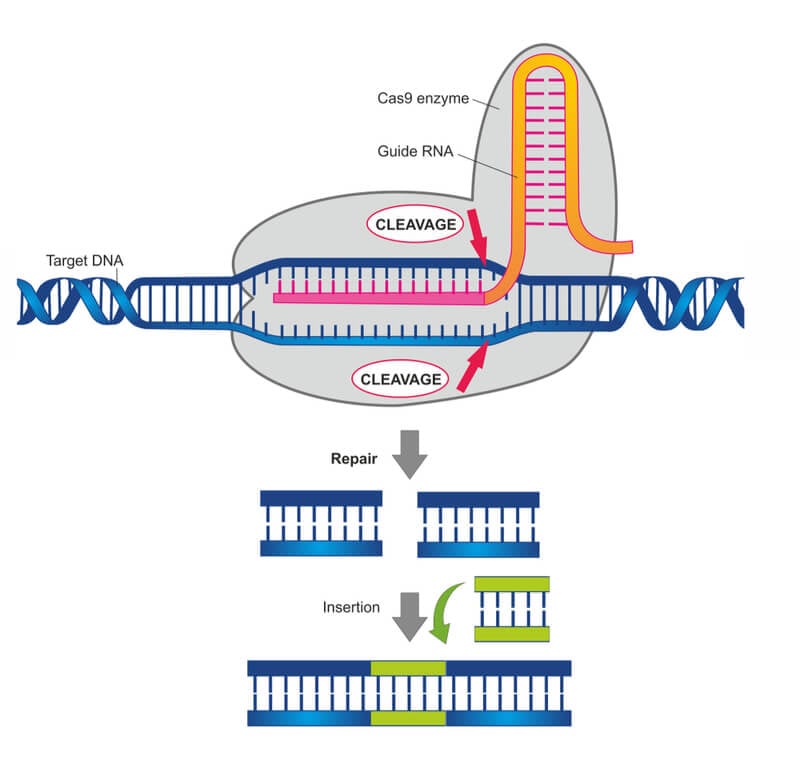
This system modifies our DNA by making a cut in the faulty gene and inserting a new functional healthy gene.
This allows an individual with, for example, a disease such as cystic fibrosis, to lead an almost normal life.
This system is very successful, but like all genomic technologies, it does come with some problems.
The CRISPR Cas9 system has to make a double stranded break for it to disrupt the faulty gene and to insert the healthy gene.
Making a double stranded break within the human genome is something which should be avoided, as it can lead to translocations and mutations which can be oncogenic.
For this reason, another system called ‘Prime Editing’ has been discovered, which removes the need to make a double stranded break within the genome.
There are some similarities with this system and with CRISPR Cas9, however, the Prime Editing system makes a single strand break in one strand of the DNA at the faulty gene site, which is then replaced with a healthy DNA strand.
The strands, however, don’t match up and will not produce the functional gene.
The unedited strand will edit itself so it is a replicate of the edited strand, resulting in a functional gene.
Therapeutic editing does have some ethical issues, as we are genetically modifying our DNA.
It poses the question whether we are able to make designer babies, which again sparks a lot of ethical views.
When designing new ways of gene editing, it is important to understand the consequences which may come with a certain system, and systems such as CRISPR Cas9 and various others indicate the advancements which therapeutics have made.
The field of therapeutics and gene therapy has sparked my interest for a future career as the field is rapidly advancing and its technologies will only get better.
 Emily's Blog